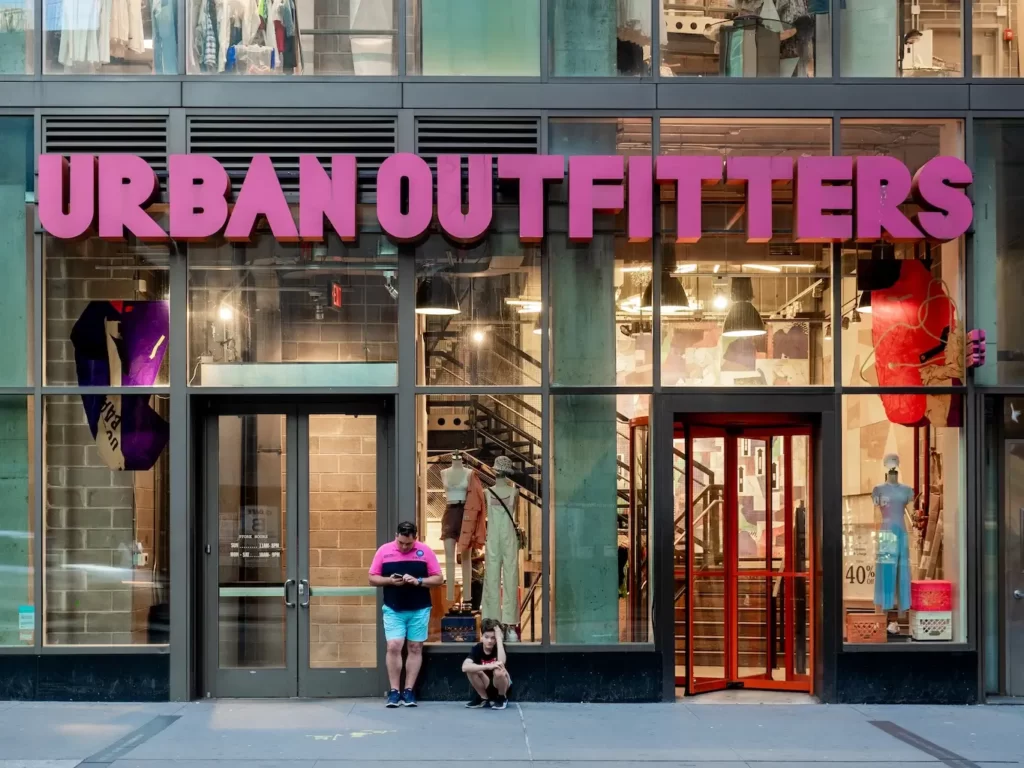
Urban Outfitters
Rated: Poor
Price: $$
Location: USA
Quick verdict
A legacy lifestyle retailer whose Urban Renewal/Vintage & ReMade program. Operating since 1983: has recirculated 6+ million garments and is genuinely differentiated. However, the brand's core operation is firmly fast fashion, with URBN ranked in the bottom 10 of Remake's 2024 Fashion Accountability Report and scoring just 16% on the Fashion Transparency Index, Best for shoppers who love the vintage aesthetic, but approach sustainability claims with heavy scepticism.
Key info
- Headquarters
- Philadelphia, Pennsylvania, USA
- Founded
- 1970
- Product categories
- Fast Fashion, Lifestyle
- Price range
- $$
- Key certifications
- Better Cotton Initiative member, US Cotton Trust Protocol member. No B Corp, Fair Trade, GOTS, or OEKO-TEX
Urban Outfitters sustainability rating
Our ratings are based on a scale from 1 (We Avoid) to 5 (Excellent). How we rate
Rating breakdown
Only 10% of direct-sourced raw materials are "responsibly sourced" as of recent reporting, with a 60% target by 2027. Joined BCI and US Cotton Trust Protocol in 2023: very late for a company this size. Heavily reliant on conventional polyester and cotton.
No evidence of living wages, Notorious for denying collective bargaining rights at a Stockholm store. COVID-era behaviour included freezing wages and cancelling orders in India, Bangladesh, and Vietnam per Remake reporting. Fashion Transparency Index 2021: just 16%.
No science-based emissions targets: URBN's goal was merely to set SBTs by 2025, not meet them. No meaningful carbon, chemical, or biodiversity commitments. Urban Renewal and the FabScrap partnership are genuine positives but represent a tiny fraction of operations.
Eco-Stylist scored Urban Outfitters 3 out of 100: among the lowest ever reviewed. URBN publishes Tier 1 & 2 supplier lists, but factory-level detail, audit results, and emissions data are absent. The sustainability page on urbanoutfitters.com is hard to find and lacks specifics.
Mid-to-high pricing ($50–$150 for apparel) is difficult to justify given widespread quality complaints. Thin materials, pilling, and unfavourable comparisons to H&M. The $5 restocking fee adds friction. Vintage/Urban Renewal pieces and home décor are the value bright spots.
What they do well
- Urban Renewal / Vintage & ReMade. Operating since 1983, this program has recirculated 6+ million garments and salvaged 1+ million pairs of vintage denim—a dedicated Herald Square store and upcycled collaborations with independent designers make this genuinely impressive for a mainstream retailer.
- KOTO Collection. Launched 2022, uses recycled cotton, recycled polyester, and traceable US cotton from domestic family farms: UO's most intentionally sustainable new-production line
- Nuuly rental service. Sister brand under URBN offers subscription clothing rental ($98/month for 6 items), a structural approach to reducing ownership and waste
- Packaging improvements: 100% of mailer bags and boxes made from recycled and recyclable materials
- FabScrap partnership. Provides end-of-life solutions for fabric waste from product creation
Room for improvement
- Dismal accountability scores: URBN ranked bottom 10 in Remake's 2024 report. Scored just 2 points in 2022 — alongside Forever 21 — with "no development in any assessment category." Scores zero for traceability.
- No living wages, no emissions targets. For a $5B+ publicly traded company, the absence of science-based emissions targets, living wage commitments, or credible supplier accountability is inexcusable. Only 10% of materials responsibly sourced with glacial progress toward 60% by 2027.
- Transparency remains minimal. Factory audits, emissions data, chemical management, and wage data are not disclosed at brand level. The Fashion Transparency Index score of 16% is embarrassing for a company generating over $5B annually.
About Urban Outfitters
Urban Outfitters traces its roots to 1970, when Richard Hayne, Scott Belair, and Judy Wicks opened the "Free People Store" near the University of Pennsylvania with just $5,000, Renamed and incorporated in 1976, the brand built its identity on eclectic, vintage-inspired goods for young adults. Today it is part of URBN (NASDAQ: URBN), a $5B+ retail empire also encompassing Anthropologie, Free People, Nuuly, and ~700 total stores.
Manufacturing is globally distributed. Primarily India, Vietnam, Turkey, and Bangladesh, with China reduced to under 5% of production. URBN publishes Tier 1 and 2 supplier lists but provides limited detail on conditions or wages. The company directly sourced over 44 million individual products in a recent year, underscoring the massive production scale.
The standout sustainability initiative is Urban Renewal (est. 1983), now branded as "Vintage & ReMade by UO," which has recirculated 6+ million garments. The KOTO line uses traceable domestic cotton and recycled materials. However, only 10% of direct-sourced raw materials are responsibly sourced, with a 60% target by 2027.
Shipping in the US offers standard, express, and rush options. Returns are accepted within 30 days with a $5 restocking fee for mailed returns (free in-store). Pricing is mid-market: higher than H&M/Zara but lower than Anthropologie. The vintage/Urban Renewal items command $45–$270 but offer genuine uniqueness.
Product highlights
Urban Renewal Vintage Surplus Rain Jacket
One-of-a-kind repurposed vintage military surplus jacket
~$79–$99
Genuinely sustainable: unique, pre-owned, no new materials used
Urban Renewal Remnant Collection
New styles made from deadstock and remnant fabrics in Los Angeles
~$45–$175
Uses waste fabric and supports domestic production
KOTO Collection Tees & Pants
Menswear basics using recycled cotton, recycled polyester, traceable US cotton
~$30–$70
UO's most intentionally sustainable new-production line
BDG Baggy Jeans
UO's bestselling denim silhouette
~$79
Culturally relevant but not sustainable. Highlights the gap between popular products and sustainability initiatives