Allbirds
Rated: Good
Price: $$
Location: USA
Quick verdict
Allbirds is best for eco-conscious consumers who prioritise comfort and innovative natural materials in everyday footwear. The brand genuinely leads on environmental transparency, with carbon footprint labels on every product, a B Corp score of 96.5, and open-sourced material innovations like SweetFoam. Major caveat: the company is in financial freefall. Revenue dropped 25% in 2024 to $189.8M, cumulative losses exceed $419M, stock is down 95%+ from IPO highs, and nearly all U.S. stores are closing by February 2026. Long-term viability is genuinely uncertain.
Key info
- Headquarters
- San Francisco, California, USA
- Founded
- 2015
- Product categories
- Shoes, Sneakers
- Price range
- $$
- Key certifications
- Certified B Corp (score 96.5), ZQ Merino, FSC-certified eucalyptus, SweetFoam Proforest-certified sugarcane. Note: Climate Label certification has expired.
Allbirds sustainability rating
Our ratings are based on a scale from 1 (We Avoid) to 5 (Excellent). How we rate
Rating breakdown
ZQ-certified merino wool, FSC-certified eucalyptus (TENCEL Lyocell), sugarcane-based SweetFoam EVA soles, and the new Terralux bio-fabricated leather. However, they don't publish an aggregate material breakdown.
The weakest area. No published factory names or audit results, no evidence of living wages. Manufacturing in China, South Korea, and Vietnam. Remake scored them 28/100.
Carbon footprint labelling on every product, 19% carbon reduction achieved in 2022, SweetFoam open-sourced for the industry. But their GHG reduction target falls short of the 1.5°C pathway, and their Climate Label certification has expired.
Better than most, with carbon labels, sustainability reports, and B Corp certification. Falls short on supply chain specifics: no factory names, no audit results, no material volume data.
Core shoes $98–$160, comparable to Veja. Frequent 40–60% off sales. However, recurring durability complaints (soles wearing through in 6 months) undermine the value proposition.
What they do well
- Material innovation pioneer. Invented SweetFoam (carbon-negative sugarcane EVA) and open-sourced it for the industry, launched Terralux bio-fabricated leather using Modern Meadow's INNOVERA technology, and created the M0.0NSHOT, the world's first net-zero carbon shoe
- Carbon footprint transparency on every product. Each item is labelled with its specific CO₂ footprint across materials, manufacturing, transportation, use, and end-of-life, a rarity in footwear that goes well beyond vague "eco-friendly" marketing
- Strong B Corp credentials. Certified since 2016 with a score of 96.5 (vs. median 50.9), also a registered Public Benefit Corporation under Delaware law
- Circularity programmes. Soles4Souls partnership donates used shoes, and Allbirds ReRun operates a second-hand resale programme
Room for improvement
- Labour transparency is inadequate. Despite environmental leadership, Allbirds provides almost no information about garment workers. No factory names, no audit results, no living wage evidence. Remake scored them 28/100.
- Durability concerns undermine sustainability claims. Recurring complaints about shoes wearing through at toes in months or soles degrading within six months. A shoe that needs replacing twice as fast is not truly sustainable.
- Business viability is in serious question. $419M in cumulative losses, stock down 95%+ from IPO, nearly all U.S. stores closing, market cap ~$32M, only $23.7M cash as of September 2025. Consumers should consider whether warranty support and product availability will continue.
About Allbirds
Allbirds was co-founded in 2015 by New Zealand footballer Tim Brown and biotech engineer Joey Zwillinger, originating from a Kickstarter campaign raising $119,000. Headquartered in San Francisco, the brand built its identity on merino wool sneakers, a radical departure from synthetic-dominated footwear.
Key proprietary materials include ZQ-certified New Zealand merino wool, FSC-certified eucalyptus fibre (TENCEL Lyocell), SweetFoam (sugarcane-based EVA, open-sourced for the industry), and Terralux bio-leather. Their B Corp score of 96.5 means they meet rigorous verified standards nearly double the 50.9 median across governance, workers, community, and environment. Manufacturing occurs in audited factories in China, South Korea, and Vietnam.
The company IPO'd on November 3, 2021, on Nasdaq (BIRD), initially soaring to ~$28/share. Revenue peaked at $297.8M in 2022, then fell to $189.8M in 2024. Co-founder Zwillinger was replaced as CEO in March 2024 by COO Joe Vernachio. The stock received a Nasdaq delisting warning in April 2024 and executed a 1-for-20 reverse split in September 2024. From 60+ stores at end of 2023, Allbirds is closing all full-price U.S. stores by February 2026, retaining only 2 U.S. outlets and 2 London locations.
Shipping is free on U.S. orders over $75. Returns accepted within 30 days; customers pay return shipping. Pricing ($98–$160 for most footwear) sits in the mid-range, competitive with Veja and slightly above mass-market but below luxury sustainable brands. The brand now bets on e-commerce and wholesale (REI, Dick's Sporting Goods) to survive.
Product highlights
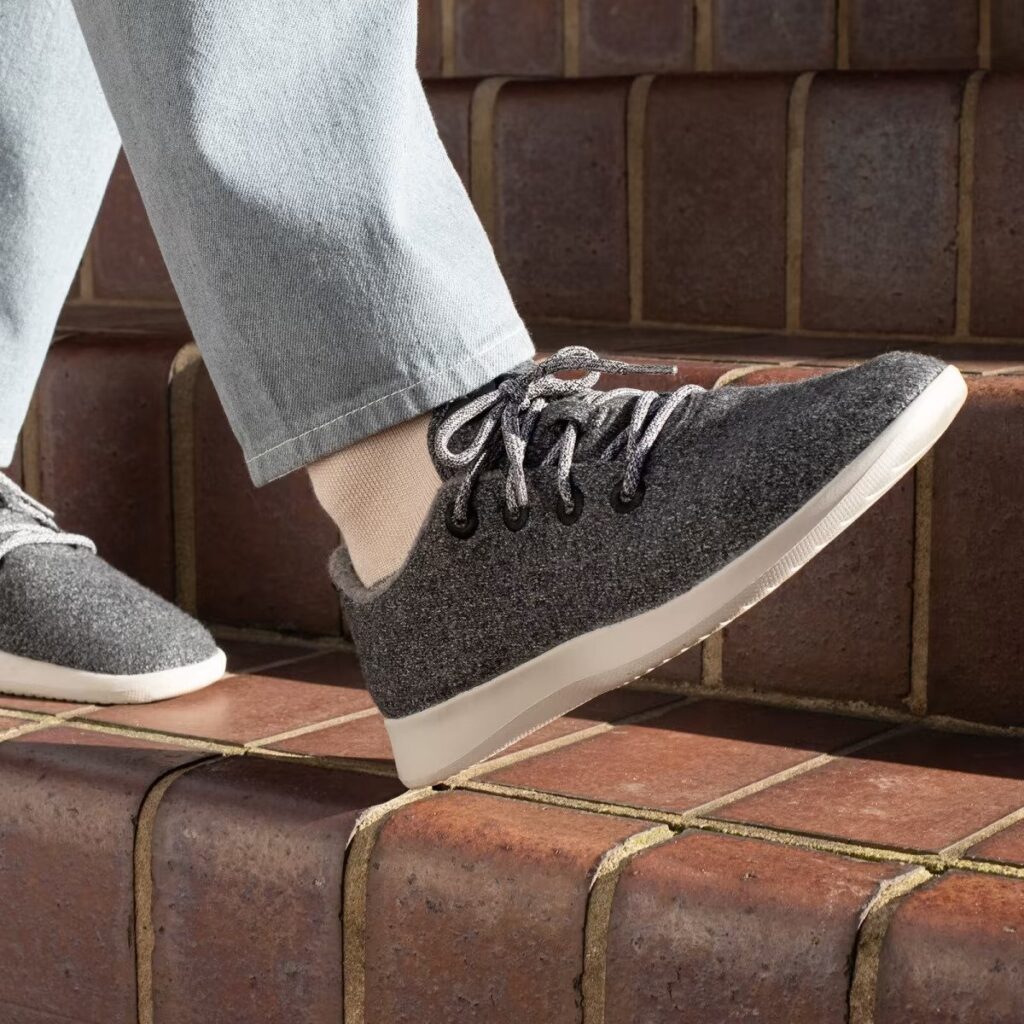
Wool Runner NZ
Reimagined 10th-anniversary merino wool sneaker with Featherbed dual-density insole and SweetFoam midsole
$110
The brand's identity piece and bestseller, with nearly one pair sold every minute over 10 years
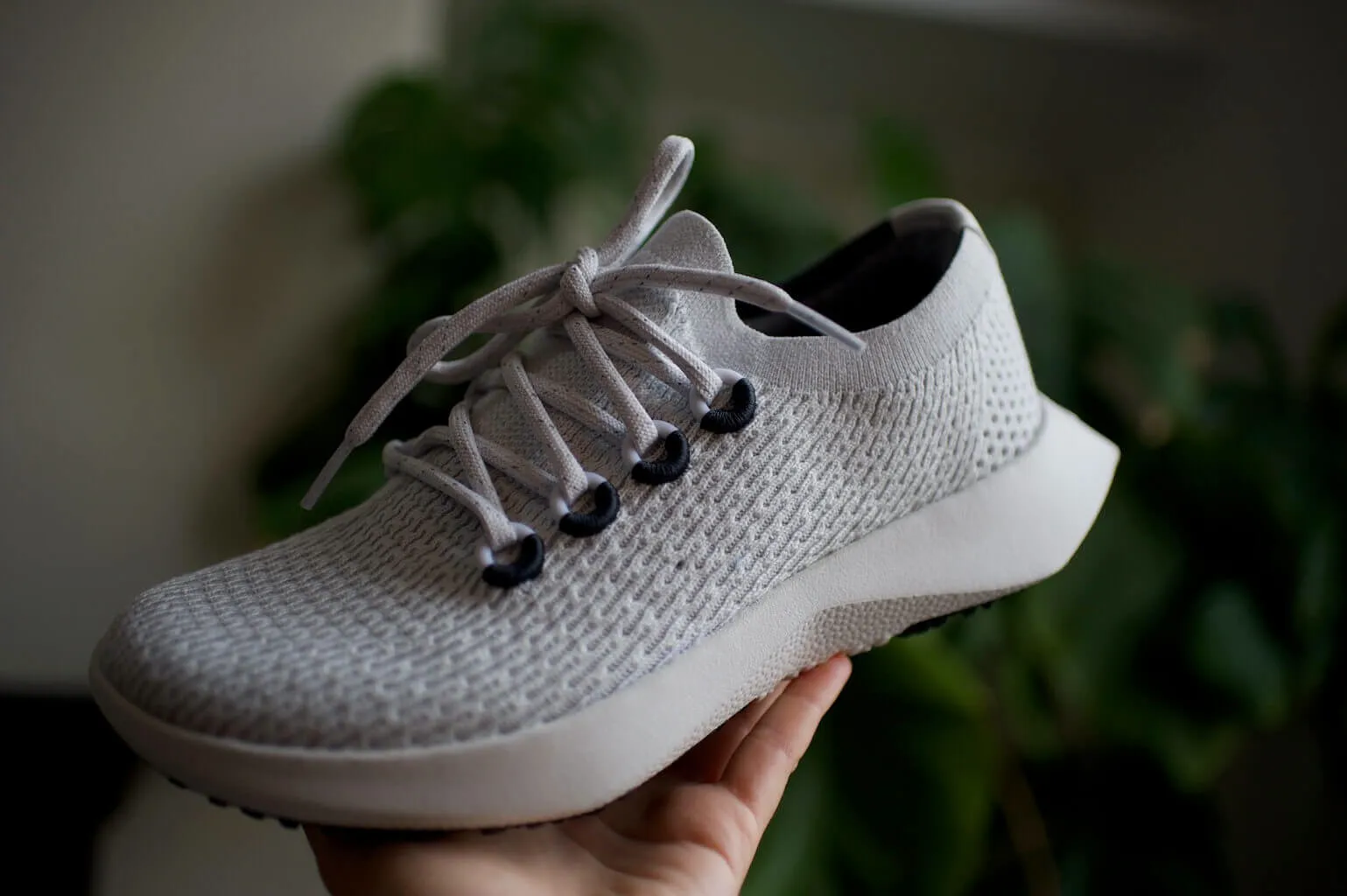
Tree Dasher 2
TENCEL Lyocell/tree fibre active shoe with recycled polyester and natural rubber outsole
$135
Versatile for walking and light running; machine washable
Runner NZ Terralux
Sneaker featuring bio-fabricated Terralux leather alternative using plant-based proteins and post-consumer waste
~$140–150
First footwear use of Modern Meadow's INNOVERA material
Wool Runner NZ Waterproof
First fully waterproof wool sneaker, launched September 2025
~$140
Solves the longstanding complaint that Allbirds aren't rain-ready
![15 Best Allbirds Alternatives: Tested & Compared [2026]](/images/blog/shoes-like-allbirds.webp)