
Mar Y Sol
Rated: Good
Price: $$
Location: USA
Quick verdict
An authentic 20+ year artisan brand with genuinely handmade, natural-fibre accessories and deep roots in Madagascar. But urgently needing to back its ethical story with published data. Mar Y Sol's 100% handmade production using renewable, biodegradable materials (raffia, sisal, seagrass, sun-tanned leather) and its two-decade artisan partnership are its strongest assets. The brand is carried by Bloomingdale's, Shopbop, and notably Eileen Fisher, whose own sustainability standards provide indirect vetting. However, despite widespread "fair trade" language, no formal fair trade certification could be verified, and the brand publishes zero impact data. No sustainability report, no artisan wage information, no environmental assessments. After 20+ years of operation.
Key info
- Headquarters
- New York, NY, USA (ships from Kutztown, Pennsylvania)
- Founded
- 2003
- Product categories
- Accessories
- Price range
- $$
- Key certifications
- No formal third-party certifications verified. Despite widespread "fair trade" language from the brand and retail partners (including Eileen Fisher), no certifying body (Fair Trade USA, WFTO, Fair Trade Federation) could be confirmed.
Mar Y Sol sustainability rating
Our ratings are based on a scale from 1 (We Avoid) to 5 (Excellent). How we rate
Rating breakdown
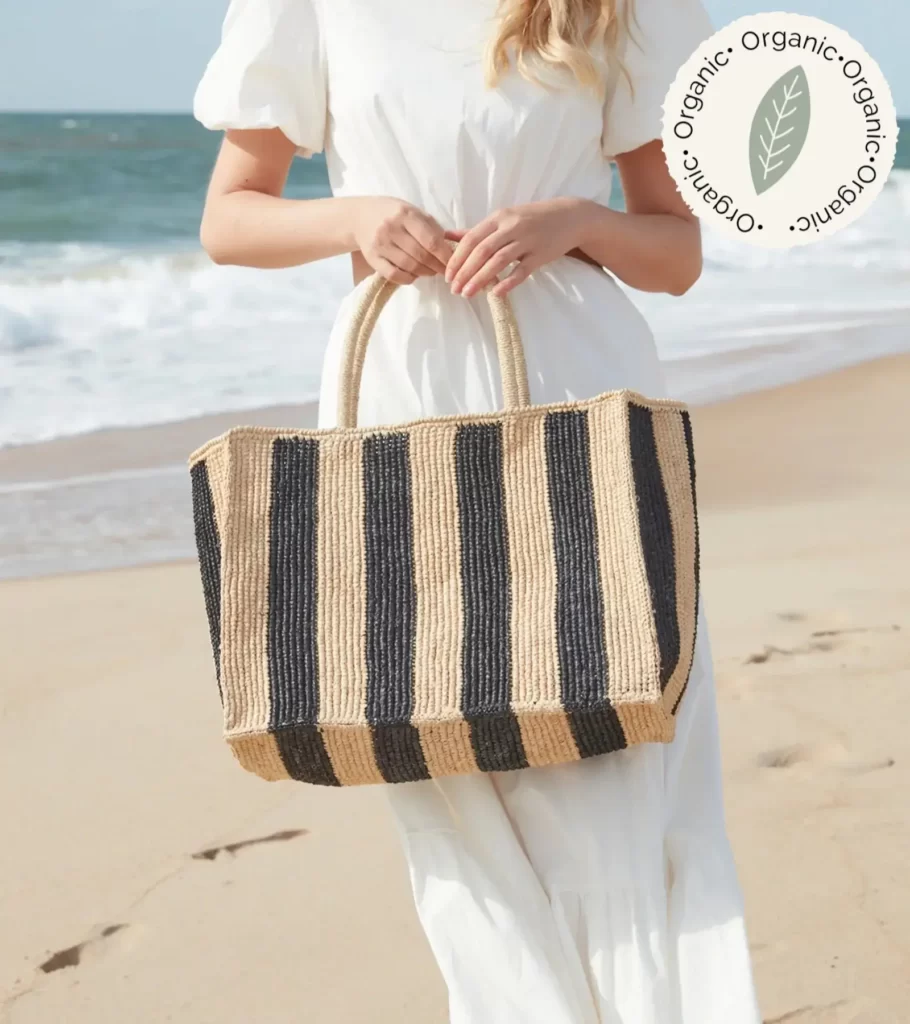
Excellent natural material selection: raffia palm, sisal, seagrass. All renewable, biodegradable, and locally sourced in Madagascar. Leather is organically tanned using only soap, water, and sunlight. Dyes are azo-free, with some colourways using dried tea leaves as natural dye. No third-party certification verifies sourcing claims, but the materials are inherently low-impact.
100% handmade in Madagascar by hundreds of artisans, with the founder's community development background lending authenticity—in 2012, one-third to one-half of revenues reportedly went back to Madagascar. However, no formal Fair Trade certification confirmed despite "fair trade" language. No wage data, audit results, or worker welfare specifics published.
Handmade production means near-zero factory energy consumption. Natural materials are biodegradable. Azo-free and natural dyes minimise chemical impact. However, no carbon footprint measurements, no packaging sustainability information, no offset programmes, and the two-leg shipping route (Madagascar to Pennsylvania to customer) has an unaddressed carbon footprint.
The weakest dimension. No dedicated sustainability page on the website. No published impact report ever across 20+ years. No supply chain mapping. No named artisan communities or profiles on the site. For a brand whose entire value proposition rests on ethical artisan partnership, the absence of verifiable data is a serious credibility gap.
Natural materials are inherently biodegradable, providing end-of-life advantages. Organically tanned leather using only soap, water, and sunlight is a genuinely low-impact process. However, no formal circularity programme, no take-back scheme, and no innovation in production beyond traditional handcraft methods.
What they do well
- Authentic 20+ year artisan partnership. Founder Laurel Brandstetter's background in urban planning and her family's NGO work in Madagascar predates the brand itself, rooting the partnership in genuine community development
- 100% handmade with all-natural materials. Every piece is hand-dyed, hand-crocheted or woven, and hand-sewn using renewable, biodegradable materials (raffia, sisal, seagrass, sun-tanned leather)
- Validated by major retailers, Carried by Bloomingdale's, Shopbop, and notably Eileen Fisher, whose own strong sustainability standards provide indirect vetting
- Accessible pricing for artisan goods. At $159-$189, these bags are competitively priced for fully handmade, ethically oriented accessories compared to peers like Bembien ($150-$298) and AAKS ($175-$350)
Room for improvement
- No verified fair trade certification. Despite the brand and partners using "fair trade" and "certified fair trade" language, no certifying body could be confirmed; this is either misleading or refers to an internal retailer assessment
- Zero published impact data. No sustainability report, no artisan wage information, no community impact metrics, and no environmental assessments after 20+ years of operation
- No online sustainability infrastructure. No sustainability page, no B Corp assessment; in 2026, a brand built on ethical sourcing needs more than storytelling
About Mar Y Sol
Mar Y Sol: Spanish for "Sea & Sun" — was founded in 2003 as Mad Imports by Laurel Brandstetter, a former city planner from Brooklyn. The brand's roots trace to 1998, when Brandstetter travelled to Madagascar following her stepfather Jim Sellers, a retired NASA engineer who had started an NGO called Starfish there after an Earthwatch expedition. Brandstetter began bringing back handwoven raffia baskets and selling them at New York street fairs and apartment parties. A $3,000 loan from her intern's mother funded her first trade show in 2005, where she landed her first retail orders.
All products are 100% handmade in Madagascar by hundreds of artisans across rural and urban communities. The brand grew from "a small family of artisans with one sewing machine" into a network that sustains livelihoods across the country. Materials. Raffia, sisal, seagrass, and organically tanned leather. Are all sourced locally in Madagascar's forests and communities. Dyes are azo-free, with some colourways using natural tea-leaf dye. The brand describes its artisans as "partners, from the design level to the finished product," and has invested in clean water projects, education, and export-readiness training.
Despite no formal certifications, Mar Y Sol is carried by Bloomingdale's, Shopbop, and Eileen Fisher. The latter describing products as "certified fair trade," though no certifying body was identified. Sales doubled annually from the first trade show, reaching a projected $1M+ by 2012. In a 2012 interview, the founder stated that one-third to one-half of revenues went back to Madagascar. A meaningful figure if still accurate, but nothing has been published since.
The most significant gap is the absence of any published impact data after over 20 years of operation. No sustainability report, no artisan wage information, no community impact metrics, and no environmental assessments exist publicly. The brand has no dedicated sustainability page on its website, and no B Corp assessment. For a brand whose entire value proposition rests on ethical artisan partnership, this lack of verifiable data is a serious credibility gap that becomes harder to overlook as consumer expectations evolve.
Product highlights
Samana Tote
Sisal basket tote with removable pom-pom accents and leather handles, 100% handmade in Madagascar.
$189
A bestseller showcasing the brand's signature playful design with functional structure and customisable pom details.
Iris Tote
Rainbow-striped crocheted raffia tote demonstrating artisan dyeing skill with vibrant azo-free colours.
$189
Demonstrates the artisans' dyeing expertise. Each stripe is individually dyed with azo-free colours, making every bag slightly unique.
Tulum Tote
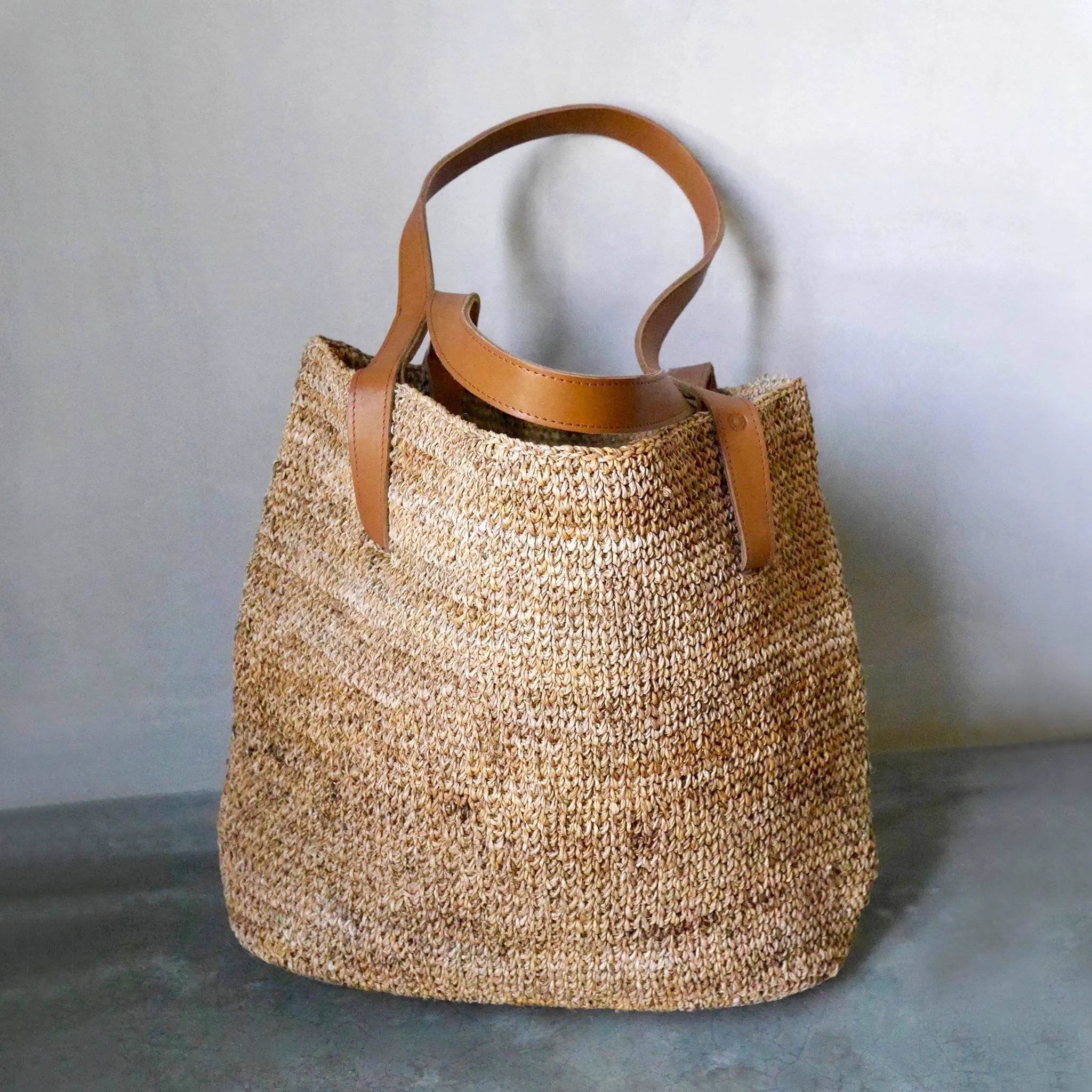
Open-weave crocheted raffia carryall with organically tanned leather handles.
$189
The quintessential beach bag. Open weave prevents sand accumulation, and the leather straps develop a patina over time.
June Crossbody
Crocheted raffia crossbody with leather strap, the brand's most compact and everyday-friendly style.
$165
The most accessible entry point, demonstrating the brand's range beyond beach totes into everyday carry.
![15 Sustainable Handbag Brands You Should Know [2025]](/images/blog/sustainable-handbag-brands.webp)